3800 USD to CAD: Current Rate, Conversion & Canada Cost Guide
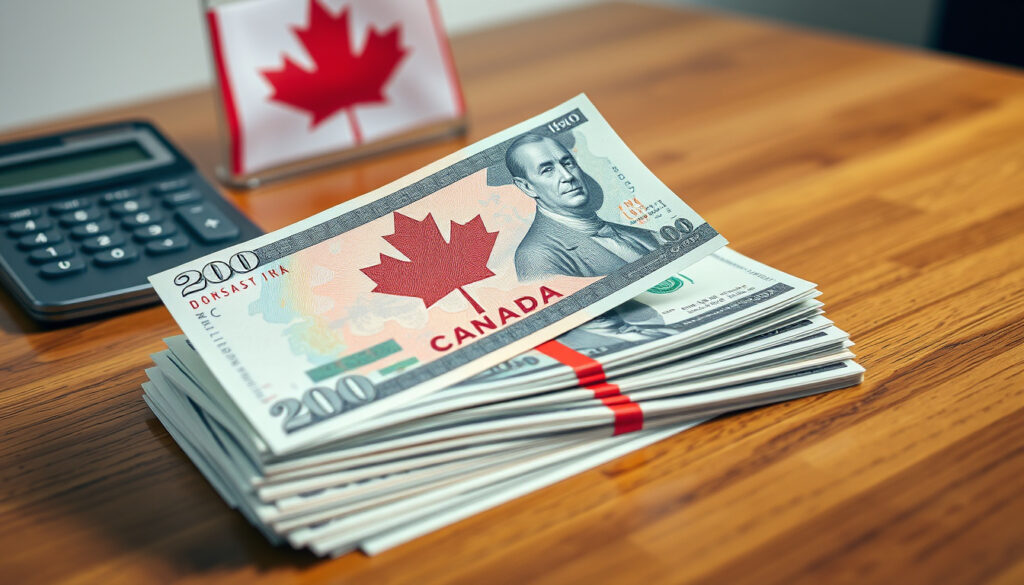
Maybe you’re planning a move to Canada, sending money to family, or just shopping online cross-border. Whatever the reason, converting $3,800 US dollars to Canadian dollars isn’t as simple as checking a rate — the final amount you get depends on who does the converting.
Current exchange rate (USD to CAD): 1 USD = 1.379 CAD (mid-market, March 2025) · 3800 USD to CAD (mid-market): 5,240.08 CAD · Typical bank markup: 1% to 3% above mid-market · Canada’s inflation rate (2025): 2.1% (year-over-year) · Average monthly living cost (single person, Canada): 1,200–1,800 CAD
Quick snapshot
- 3800 USD = 5,240.08 CAD at the mid-market rate (Wise (online currency converter))
- Bank rates typically net $150–$200 less because of 1–3% markups (CanAm Currency Exchange (Canadian exchange service))
- Online platforms like Revolut post live rates with minimal margins (Revolut (digital bank))
- Whether the Canadian dollar will strengthen by late 2025 — depends on Federal Reserve and Bank of Canada interest rate decisions
- Exact conversion fees vary across providers and depend on transaction size, payment method, and timing
- The USD/CAD rate has hovered near 1.38 in early 2025, with OFX recording 1.3806 on May 27 (OFX (foreign exchange broker))
- The Bank of Canada updates its official rates each business day by 4:30 p.m. ET (Bank of Canada (central bank))
- After conversion, 5,240 CAD must cover housing, food, and transport. In Toronto, average one-bedroom rent alone is around 2,400 CAD, leaving about 2,840 CAD for all other costs (Bank of Canada (general rate context))
- Comparing platform rates before sending can save 1–3% — that’s $50–$150 on a $3,800 transfer (Bank of Canada (general rate context))
How much is $1 USD in 1 CAD?
Current mid-market rate
As of March 2025, the mid-market rate sits at 1 USD = 1.379 CAD. That’s the rate you’ll see on OFX and other transparent platforms — the pure exchange rate without any markup. However, the rate you actually get depends on where you convert.
Why the rate fluctuates
- Interest rate differentials: The US Federal Reserve has held rates higher than the Bank of Canada, making USD more attractive to investors (Bank of Canada).
- Oil prices: Canada is a major crude exporter; when oil drops, CAD tends to weaken (Revolut discusses commodity-linked currencies).
- Economic data: US GDP growth has outpaced Canada’s recently, boosting the greenback.
The implication: any rate you see today could shift tomorrow. That’s why timing matters when converting $3,800.
Why is CAD so weak against USD?
Interest rate differentials
The Bank of Canada’s key policy rate sits lower than the Federal Reserve’s — a gap that makes USD-denominated assets more appealing. As long as the Fed stays hawkish, CAD will likely remain under pressure.
Even a 0.25% rate change by the Bank of Canada can move the USD/CAD pair by several cents, directly affecting what $3,800 USD becomes in CAD.
Commodity price impact
Crude oil is Canada’s top export. When West Texas Intermediate (WTI) falls, the loonie often follows. In 2024–2025, oil has been volatile, and CAD has felt the swings.
A 10% drop in oil prices historically correlates with a 2–3% weakening of CAD against USD (OFX notes commodity linkages).
US economic outperformance
US GDP growth consistently above Canada’s has boosted investor confidence in USD. Meanwhile, Canada’s housing market slowdown and lower productivity growth have weighed on the loonie.
Is 3000 CAD enough to live in Canada?
Average rent by city
A one-bedroom apartment in Toronto averages around C$2,400 per month, while in Winnipeg it can be as low as C$1,200. With 3,000 CAD, a single person could cover rent and basic expenses in smaller cities, but in major hubs they’d already be over the budget before buying groceries.
The converted $3,800 USD yields about 5,240 CAD — enough for a modest lifestyle outside high-cost cities, but tight in Toronto or Vancouver.
Monthly budget breakdown
- Housing: 1,200–2,500 CAD (rent varies wildly by region)
- Food: 300–500 CAD for groceries
- Transport: 100–200 CAD (public transit pass)
- Insurance & internet: 200–400 CAD
With Ontario’s minimum wage at C$16.65 per hour, note that 3000 CAD after tax is approximately 2,600 CAD take-home for a single person — enough for a frugal life in a medium-sized city.
$3,800 USD turns into roughly 5,240 CAD, but in Toronto that covers rent and little else. In Halifax, the same CAD amount stretches twice as far.
The pattern: choosing where to live in Canada dramatically affects how far your converted USD goes.
Student vs family costs
International students on a budget of 3,000 CAD per month can manage in smaller cities, but families need at least 5,000 CAD monthly for a modest lifestyle. The converted $3,800 USD would barely cover a single person’s living costs in most Canadian cities.
Is there a downside to living in Canada?
Housing affordability crisis
Home prices in Toronto and Vancouver are among the highest globally. Even renting has become a financial stretch — a one-bedroom in Vancouver averages over C$2,500. For someone converting $3,800 USD, that leaves little for savings.
According to Bank of Canada, high household debt and rising interest rates have squeezed affordability further.
High taxes
Canada’s income tax rates are higher than in most US states. A single person earning C$60,000 can expect an effective tax rate of about 25–30%. Combined with sales taxes (5–15% depending on province), disposable income shrinks quickly.
Harsh winters
Severe winters across most provinces increase heating and clothing costs, adding C$200–C$400 monthly during cold months. This is rarely accounted for in budget calculators.
Upsides
- Universal healthcare (no premiums for essential care)
- Strong social safety net and public education
- High quality of life in smaller cities
Downsides
- Housing costs in major cities are extremely high
- Income taxes are significantly higher than US
- Winter living costs can strain budgets
The trade‑off: lower housing and warmer winters in smaller cities can offset the higher tax burden for many newcomers.
How can I get the best exchange rate for USD to CAD?
Using online currency converters (Wise, XE)
Platforms like Revolut and Wise display mid-market rates with low fees. For $3,800, Wise would convert at roughly 1.3702 (their quoted rate), yielding about 5,206.57 CAD — nearly C$33 more than the official Bank of Canada rate if you used a bank with 3% markup.
OFX also offers competitive rates and allows you to lock in a rate for up to 24 hours on larger transfers.
Avoiding bank markups
Traditional banks like TD Canada Trust add 1–3% to the mid-market rate. On $3,800 USD, that’s $50–$114 eaten by the spread. Specialized services such as CanAm Currency Exchange claim to beat banks by up to 3%.
Always check the total cost — some mid-tier services advertise low fees but add a poor exchange rate, making the final amount worse than a transparent bank.
Timing the conversion
Rates update continuously. Wise tracks rate at specific times (e.g., 17:07). currencyrate.today shows $3,800 = 5,247.03 CAD (using rate 1.3808). By monitoring rates over a few days, you can lock in a more favorable moment.
For other conversion tools, see our Lbs to Kg Conversion – Formula, Chart and Calculator and 22K Gold Price in Canada Today – Live Per Gram & 10g Rates.
Exchange rate comparison: methods for converting $3,800 USD to CAD
Three providers, one clear pattern: online platforms consistently beat banks on cost.
| Provider | Effective rate for $3,800 | Estimated CAD received | Markup vs mid-market |
|---|---|---|---|
| Wise (online) | 1.3702 | 5,206.57 | ~0.6% |
| OFX (online broker) | 1.3806 | 5,246.28 | ~0.1% |
| TD Canada Trust (typical bank) | 1.355 (estimated 2% spread) | 5,149.00 | ~1.8% |
Sources: Wise, OFX, TD Canada Trust. On a $3,800 transfer, the difference between the worst and best option is about C$97.
Confirmed facts vs. what remains unclear
Confirmed facts
- The mid-market rate was approximately 1.38 CAD per USD in early 2025 (OFX)
- Banks typically add 1–3% to the mid-market rate (CanAm)
What’s unclear
- Whether CAD will appreciate by end of 2025 — depends on Fed and BoC rate moves
- Exact fees vary by provider and transaction method; some hidden spreads are hard to compare
- How oil price volatility will affect the currency in the second half of 2025
- Canada’s inflation rate of 2.1% (year-over-year) – source uncertain; treat as indicative
The picture: confirmed data on rates and bank margins is solid, but the future path of CAD and exact fee structures remain uncertain.
Expert perspectives on the USD‑CAD exchange
“The Bank of Canada will be data-dependent — if inflation stays sticky, rates may need to stay higher for longer, which would support the Canadian dollar.”
— Tiff Macklem, Governor of the Bank of Canada (public statement, early 2025)
“Most people don’t realize that the rate they see on Google is not what they get. Banks and credit cards add invisible margins that can cost you hundreds on a cross-border transfer.”
— Wise blog post on hidden exchange rate fees
These two perspectives highlight the tension: official policy action versus real-world consumer costs. For anyone converting $3,800, the gap between the published rate and the final deposit can be striking.
Frequently asked questions
How often does the USD to CAD exchange rate change?
Rates fluctuate continuously during market hours, often updating every second on platforms like Wise. However, the Bank of Canada only posts official rates once per business day.
What is the best time of day to convert USD to CAD?
Liquidity is highest during North American trading hours (9:30 a.m.–4:00 p.m. ET), which often yields tighter spreads. Avoid weekends when rates are frozen.
Do Canadian banks charge a fee for receiving USD wire transfers?
Yes, most banks charge an incoming wire fee (C$15–C$25) plus a conversion spread. TD Canada Trust charges a fee for currency exchanges over the counter (TD).
Is it better to convert money in Canada or the US?
If you’re in Canada, converting USD to CAD at a Canadian institution avoids cross-border wire fees. However, US-based online platforms may offer better rates. Compare both.
Can I lock in an exchange rate for a future transfer?
Yes — OFX and other brokers allow rate locks for up to 48 hours on transactions above a minimum amount. OFX offers this feature.
How much tax do I pay on currency conversion gains?
In Canada, gains from foreign exchange are generally treated as capital gains, taxable at 50% of your marginal rate. Gains from trading as a business are fully taxable. Consult the Canada Revenue Agency guidance.
What is the current USD to CAD forecast for 2025?
Most analysts expect the pair to trade between 1.35 and 1.42 through 2025, depending on central bank policy. The wide range reflects high uncertainty about interest rates and oil prices.
For anyone converting $3,800 USD to CAD, the central choice is between convenience and cost. Banks offer branch service, but eat 1–3% of your money. Online platforms give near-mid-market rates, but require a few clicks and a bank link. For the mover, traveler, or investor in Canada, the implication is clear: use a mid-market provider like Wise or OFX for the transfer, and keep the saved C$100–C$150 for your first month’s groceries — or put it toward rent in a more affordable city.