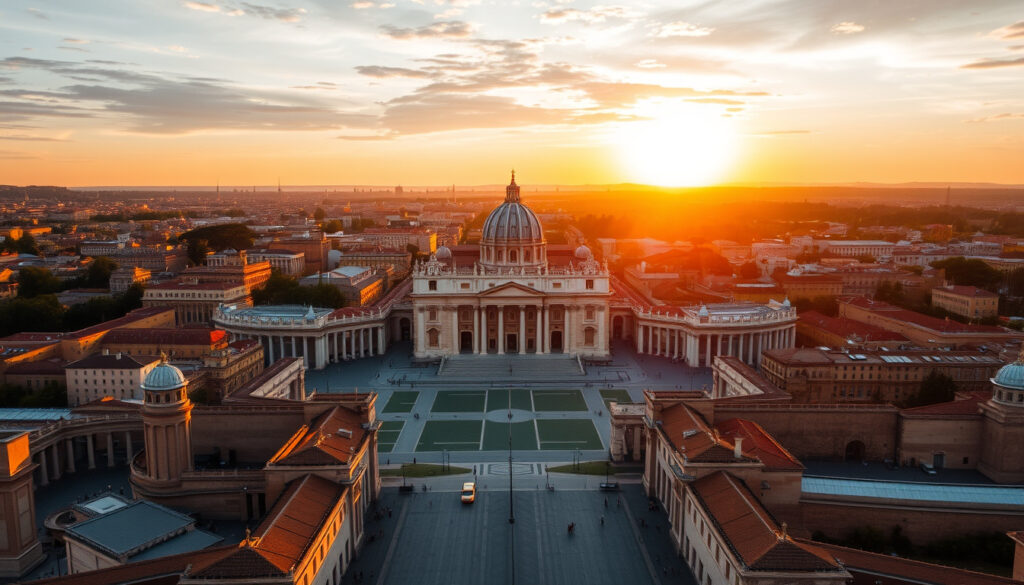
What Is the Smallest Country in the World – Vatican City Facts
When people ask what is the smallest country in the world, the answer consistently points to Vatican City. This tiny sovereign state encompasses just 0.44 square kilometers, yet it carries outsized spiritual, cultural, and political weight as the administrative heart of the Roman Catholic Church. Home to the Pope and some of humanity’s most treasured artistic masterpieces, Vatican City stands as a unique anomaly on the global map—a theocratic city-state smaller than many city parks, yet visited by millions each year.
Despite its diminutive footprint, Vatican City commands attention disproportionate to its size. The nation-state occupies a position entirely encircled by Rome, Italy, making it one of the most distinctive enclaves in the world. Its population of roughly 880 residents makes it the only country on Earth with fewer than 1,000 inhabitants. Understanding Vatican City means grappling with how such a small territory can wield such profound influence over more than a billion faithful worldwide.
This article examines Vatican City’s defining characteristics, its path to sovereignty, how it compares to other microstates, and the historical circumstances that shaped its existence. The facts presented draw from established sources including encyclopedic references, governmental publications, and international organization records.
What Is the Smallest Country in the World?
Vatican City holds the distinction of being the world’s smallest independent sovereign state by land area. Measuring precisely 0.44 square kilometers (0.17 square miles or approximately 121 acres), it occupies a footprint smaller than New York’s Central Park. For context, this tiny territory sits entirely within the Italian capital of Rome, on the west bank of the Tiber River. The Vatican walls that mark its boundaries date from medieval and Renaissance periods, creating a clearly defined border within one of Europe’s largest metropolitan areas.
The designation of “smallest country” requires careful qualification. Vatican City is smallest by physical land area, but when measuring by population, other nations fall below its roughly 880 residents. This distinction matters because different ranking methodologies produce different results. The United Nations and international legal bodies consistently recognize Vatican City as a sovereign entity, distinct from but closely linked to the Holy See, which serves as the Catholic Church’s governing apparatus.
Vatican City claims the title of smallest country by land area. However, when ranking by population alone, island nations like Tuvalu (approximately 11,000 residents) and Nauru (roughly 12,500 residents) would technically rank lower. The choice of measurement metric determines which country holds the “smallest” designation.
Overview Grid
Key Insights
- Vatican City is the only country in the world with a population under 1,000 people
- The population fluctuates between 800 and 1,000 depending on personnel assignments
- It is the world’s smallest sovereign state by land area, confirmed by multiple international sources
- Despite its size, it serves as the spiritual center for approximately 1.2 billion Catholics globally
- The state operates independently from Italy with its own government, laws, and postal system
- The Vatican functions as the administrative headquarters of the Roman Catholic Church
- 372 additional Vatican citizens reside abroad, primarily as diplomats
Snapshot Facts
| Fact | Detail |
|---|---|
| Land Area | 0.44 km² (121 acres) |
| Population (2024) | Approximately 882 residents |
| Population Density | About 2,000 residents per km² |
| Currency | Euro (€) |
| Government Type | Absolute theocratic monarchy (papacy) |
| Head of State | The Pope |
| UN Status | Observer state (Holy See) |
| Date of Sovereignty | February 11, 1929 |
How Big Is Vatican City?
At precisely 0.44 square kilometers, Vatican City covers an area that defies easy comprehension. To visualize its scale, one might consider that it fits roughly four times into Monaco, the world’s second-smallest country. The entire territory can be crossed on foot in under twenty minutes. Yet within this compact space, the Vatican packs extraordinary density—St. Peter’s Basilica, the Sistine Chapel, the Vatican Museums, the Apostolic Palace, and extensive gardens all occupy this tiny footprint.
Geographic Boundaries
Vatican City occupies a landlocked position entirely surrounded by Rome, Italy, on the western bank of the Tiber River. The borders, marked by imposing medieval and Renaissance walls, create an abrupt transition from Italian territory to independent Vatican ground. This physical boundary, fixed since the Lateran Treaty of 1929, measures approximately 3.2 kilometers in perimeter. The Vatican’s geographic isolation from any coastline or international borders places it among the world’s most unusual sovereign territories.
Inside these walls, the territory breaks down into several distinct zones. The northern portion contains St. Peter’s Square, the Basilica, and associated ecclesiastical buildings. The southern area encompasses the Vatican Gardens, which cover roughly one-third of the total area. The western section houses the museums, the Sistine Chapel, and administrative buildings. This arrangement demonstrates remarkable efficiency, packing centuries of religious and administrative function into a space smaller than many university campuses.
Population Density and Demographics
Despite its tiny land area, Vatican City maintains a surprisingly high population density of approximately 2,000 residents per square kilometer. This figure places it among the most densely populated territories on Earth. However, the demographic composition differs markedly from typical nations. The resident population consists primarily of clergy, members of the Swiss Guard, nuns, and laypeople working in secretarial, domestic, trade, and service roles. Many positions require residency, explaining why a territory this small maintains a permanent population at all.
An additional 372 Vatican citizens reside outside the city-state, according to available data. This group predominantly comprises diplomats serving in Holy See missions worldwide and cardinals who maintain residences in Rome. This diaspora of Vatican citizens scattered across global diplomatic posts represents a unique demographic phenomenon—the governing body of a tiny sovereign state distributed across embassies and chanceries around the world.
The population of Vatican City varies throughout the year as personnel assignments change. Official counts from 2024 indicate approximately 882 residents, though this figure can swing between 800 and 1,000 depending on temporary assignments, diplomatic missions, and the cycling of ceremonial guards.
Vatican City vs. Smallest by Population
When examining what is the smallest country in the world, measuring by population produces a different ranking than measuring by land area. Vatican City remains the undisputed smallest by territorial size, but other nations contain fewer residents when population becomes the metric.
Comparing the World’s Smallest Nations
Several microstates compete for distinction as the world’s smallest countries, each representing unique governance experiments. Understanding their differences illuminates why different sources cite different “smallest” nations depending on their measurement criteria.
| Country | Area | Population | Notable Features |
|---|---|---|---|
| Vatican City | 0.44 km² | ~882 | Smallest sovereign state; spiritual hub for 1.2 billion Catholics |
| Monaco | 1.98 km² | ~39,000 | Independent city-state on French Riviera; famous for casinos |
| Nauru | 21 km² | ~12,500 | Smallest island country; phosphate mining economy |
| Tuvalu | 26 km² | ~11,900 | Pacific island nation; lowest population among sovereign states |
| San Marino | 61 km² | ~34,000 | Landlocked nation within Italy; world’s oldest republic |
Smallest by Population: Tuvalu
If the question becomes “what is the smallest country by population?” the answer shifts to Tuvalu, a Pacific island nation with approximately 11,900 residents. This former British colony encompasses roughly 26 square kilometers across nine atolls in the western Pacific Ocean. Tuvalu ranks as the world’s least-populated sovereign state aside from Vatican City, which technically occupies a unique category as the only nation under 1,000 residents.
Nauru, with roughly 12,500 inhabitants across 21 square kilometers, presents another candidate for smallest-by-population when excluding Vatican City. This phosphate-rich island in the western Pacific experienced economic upheaval following the depletion of its primary natural resource, creating demographic challenges that affected population levels in recent decades.
International rankings of “smallest countries” depend entirely on the metric applied. Vatican City is unambiguously smallest by area and population when including all territories. Excluding it produces different results, with Tuvalu claiming the lowest population and Nauru falling near the bottom by both metrics. Always verify which measurement standard a source employs.
Is Vatican City a Sovereign Country?
The question of whether Vatican City constitutes a legitimate sovereign country occasionally surfaces among those unfamiliar with international law. The answer, firmly established through decades of diplomatic practice, international recognition, and legal documentation, is an unambiguous yes. Vatican City operates as an independent sovereign state with complete authority over its internal affairs, foreign relations, and territorial administration.
Governance Structure
Vatican City functions as a papacy—an absolute theocratic monarchy—governed by the Pope, who exercises complete executive, legislative, and judicial authority within the territory. The Pope holds ultimate decision-making power over all aspects of governance. This concentrated authority distinguishes the Vatican from virtually every other modern state, where power typically distributes across multiple branches and institutions.
Supporting the Pope’s governance, several bodies administer different aspects of Vatican operations. The Governorate of Vatican City State handles daily administration, security, civil services, and diplomatic representation. The Secretariat of State manages foreign relations for both the Holy See and Vatican City. This dual structure reflects the distinction between the Holy See (the church’s spiritual and diplomatic apparatus) and Vatican City (the physical sovereign territory).
International Recognition
Vatican City maintains diplomatic relations with numerous nations and holds observer status at the United Nations through the Holy See. The Holy See, distinct from Vatican City but intimately connected, has established formal diplomatic relationships with over 180 countries and international organizations. This network of diplomatic ties confirms broad international recognition of Vatican sovereignty, though recognition sometimes extends specifically to the Holy See rather than the city-state separately.
The Lateran Treaty of 1929, which formally established Vatican City as an independent sovereign entity, remains the foundational legal document confirming this status. Signed between the Holy See and the Kingdom of Italy, this treaty ended nearly sixty years of dispute following Italy’s unification and annexation of the Papal States in 1870.
Legal Independence
Operating entirely independently from Italian law, Vatican City maintains its own legal system, postal service, radio station, pharmacy, and supermarket. The Vatican’s legal code draws from canon law and specifically promulgated regulations rather than Italian statutes. Citizens of Vatican City hold distinct nationality status, separate from Italian citizenship, though Vatican citizenship functions differently than typical national citizenship—it derives primarily from assignment to Vatican service rather than birth or naturalization.
Historical Timeline of Vatican City
The territory now known as Vatican City carries ancient origins, but its modern status as an independent sovereign state dates only to the twentieth century. Understanding this history requires tracing nearly two millennia of transformation from Roman marshland to the center of Christendom.
-
Roman authorities drained the flood-prone Ager Vaticanus region. The area developed into significant territory including what became St. Peter’s Square. -
Early Christians began venerating the site associated with the martyrdom of St. Peter the Apostle. The location’s religious significance grew steadily through the subsequent centuries. -
Pope Stephen II received the Papal States from Pepin the Short, establishing secular papal control over substantial central Italian territories. This arrangement lasted until 1870. -
Construction of St. Peter’s Basilica proceeded under successive popes, eventually replacing the 4th-century original. Michelangelo painted the Sistine Chapel ceiling during this period (1508-1512). -
Italian unification forces captured Rome and annexed the Papal States. Pope Pius IX refused to recognize Italian sovereignty, leading to nearly six decades of papal seclusion within Vatican walls. -
The Lateran Treaty, signed between the Holy See and the Kingdom of Italy, officially established Vatican City as an independent sovereign state, ending the “Roman Question.” -
The United Nations granted observer status to the Holy See, expanding Vatican diplomatic engagement with international organizations while maintaining its unique non-member role.
What We Know vs. What Remains Uncertain
While Vatican City’s status as the world’s smallest country by land area is firmly established and universally acknowledged, certain details invite clarification. Distinguishing confirmed facts from areas of genuine ambiguity helps readers navigate the available information responsibly.
Established Information
| Land Area | 0.44 km² (confirmed by multiple authoritative sources) |
| Sovereignty Date | February 11, 1929 (Lateran Treaty signing) |
| Location | Entirely enclosed within Rome, Italy |
| Governance | Absolute papal authority; Pope as head of state |
| UN Status | Observer state (Holy See since 1984) |
| Population Range | 800-1,000 residents (fluctuates with assignments) |
Areas of Uncertainty
| Precise Population Count | Current official count cited as 882, but methodology for ongoing tallying varies between sources |
| Citizenship Statistics | Citizen population figures may not capture all temporary assignments or dual citizenships |
| Future Sovereignty Trajectory | Long-term sustainability of sovereign status depends on complex political and ecclesiastical factors |
Background and Significance
Vatican City’s significance far exceeds what its physical dimensions might suggest. The territory serves as the global nerve center for the Roman Catholic Church, the largest Christian denomination with approximately 1.2 billion adherents. Every major decision affecting Catholic governance, doctrine, and diplomatic relations originates within these walls. The Pope, residing in the Apostolic Palace, guides a church presence across virtually every nation on Earth.
Beyond its religious function, Vatican City houses some of humanity’s most significant artistic and cultural treasures. The Vatican Museums preserve countless manuscripts, sculptures, and paintings accumulated across centuries of papal patronage. Michelangelo’s Sistine Chapel ceiling, the Raphael Rooms, and the Pinacoteca’s masterworks represent artistic achievements ranking among civilization’s greatest. St. Peter’s Basilica, the second-largest religious building in Christendom, draws pilgrims and tourists by the millions annually.
The Vatican’s economic model deserves note as well. Rather than generating revenue through conventional taxation or manufacturing, the state operates with income streams including museum admission fees, souvenir sales, concert revenues, and voluntary contributions from Catholics worldwide. The unique financial structure reflects the territory’s extraordinary circumstances—governing a spiritual empire while occupying a physical footprint smaller than most commercial complexes.
Sources and Expert Perspectives
The information presented in this article draws from established encyclopedic sources, governmental publications, and international organization documentation. Several reference works merit specific acknowledgment for their contributions to public knowledge about Vatican City.
“Vatican City became an independent sovereign state on February 11, 1929, through the Lateran Treaty signed between the Holy See and the Kingdom of Italy.”
— Encyclopedic references on Vatican City sovereignty
The United Nations maintains records confirming Holy See observer status, while the CIA World Factbook provides detailed profiles of both Vatican City and the Holy See as distinct entities. Britannica’s comprehensive entry on Vatican City has undergone expert editorial review, establishing its credibility for factual reference. Wikipedia’s Vatican City article aggregates sources across multiple languages and disciplines, though readers should verify specific claims against primary sources where possible.
The Vatican itself publishes official information through Vatican.va, though access and verification of specific data points varies. Treaty documentation from the United Nations archives provides authoritative records of the Lateran Treaty and subsequent international agreements involving Vatican City and the Holy See.
Key Takeaways
Vatican City stands as the world’s smallest sovereign state by land area, encompassing just 0.44 square kilometers within Rome, Italy. The territory maintains full international recognition as an independent nation-state, governed by the Pope through absolute papal authority. Its population of approximately 880 residents makes it uniquely the only country with fewer than 1,000 inhabitants.
The Lateran Treaty of 1929 established Vatican sovereignty after nearly sixty years of dispute following Italian unification. Since then, the tiny state has functioned as the spiritual and administrative center of the Roman Catholic Church, preserving extraordinary artistic treasures and wielding diplomatic influence through the Holy See’s extensive international relationships.
For those interested in global comparisons, it’s worth noting that while Vatican City is smallest by area, nations like Tuvalu and Nauru rank lowest by population. The choice of measurement metric determines which country holds the distinction of “smallest.” Those seeking to understand what makes the best country to live in will find that factors beyond mere size determine quality of life and national significance.
Frequently Asked Questions
What is the smallest country in the world by land area?
Vatican City is the world’s smallest country by land area, spanning just 0.44 square kilometers. It is smaller than Monaco, the next smallest sovereign state, which covers approximately 1.98 square kilometers.
How many people live in Vatican City?
Approximately 882 people reside in Vatican City as of 2024, though this figure fluctuates between 800 and 1,000 depending on personnel assignments. Vatican City is the only country in the world with a population under 1,000.
What currency does Vatican City use?
Vatican City uses the Euro (€) as its official currency. Despite being a sovereign state, the Vatican does not mint its own coins or print its own banknotes, instead using Euro currency issued through Italian channels.
Is Vatican City a sovereign country?
Yes, Vatican City is a fully recognized sovereign state. It achieved independence on February 11, 1929, through the Lateran Treaty with Italy. The state maintains its own government, laws, postal system, and diplomatic relations with nations worldwide.
Who governs Vatican City?
The Pope serves as the head of state and absolute ruler of Vatican City, exercising complete executive, legislative, and judicial authority. This governance structure, known as a papacy, represents a unique form of theocratic monarchy.
What is the smallest country by population?
Vatican City is technically the smallest by population with fewer than 1,000 residents. If excluding Vatican City, Tuvalu (approximately 11,900 residents) and Nauru (roughly 12,500 residents) rank as the least-populated sovereign nations.
Where is Vatican City located?
Vatican City is entirely surrounded by Rome, Italy, making it a landlocked enclave. It sits on the west bank of the Tiber River, with its borders marked by medieval and Renaissance walls that separate it from Italian territory.
What major landmarks exist in Vatican City?
Vatican City contains St. Peter’s Basilica, the Sistine Chapel, the Vatican Museums, and the Apostolic Palace. These sites house invaluable artistic treasures including Michelangelo’s ceiling frescoes and countless preserved manuscripts.
How did Vatican City become independent?
Vatican City gained independence through the Lateran Treaty of February 11, 1929, signed between the Holy See and the Kingdom of Italy. This treaty resolved the “Roman Question” that arose when Italy annexed the Papal States in 1870.
Does Vatican City have United Nations status?
The Holy See holds observer status at the United Nations, granted in 1984. This status allows Vatican representation in UN proceedings while maintaining its unique position as neither a full member nor a typical observer state.
More related posts
 Elections Canada Results 2025: Full Breakdown and Maps
 UEFA Nations League Standings – 2024/25 Final Tables
 Max Holloway: McGregor Rematch, Records & Next Fight
 George Michael’s Death: Cause, Estate, and Legal Battles
 Sosie Bacon: Biography, Age, Movies, and Family
 Things to Do Montreal – Top Attractions and Itineraries
 Cass Elliot: Biography, Daughter, and Death Myths Debunked
 Sarah Fillier: Salary, Age, Stats & Personal Life