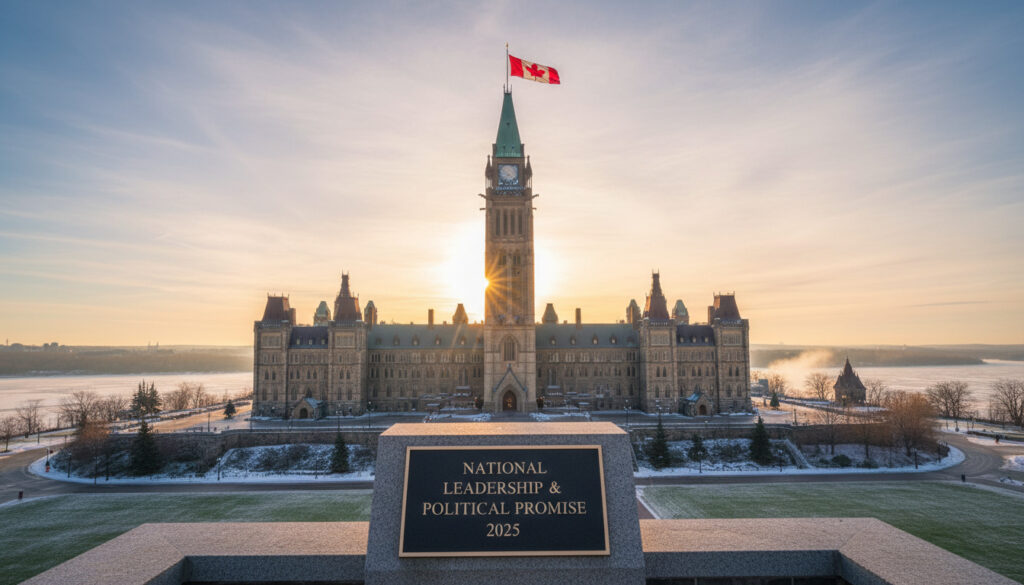
Premier Ministre du Canada – Mark Carney Leads in 2025
Mark Carney assumed office as the 24th Prime Minister of Canada on March 14, 2025, succeeding Justin Trudeau after nearly a decade of Liberal Party governance. The former central banker took the helm following a snap leadership election held days earlier, marking a significant transition in Canadian federal politics amid ongoing international trade tensions.
Carney’s ascension represents a strategic pivot for the Liberal Party, which faced declining approval ratings under Trudeau’s tenure. The new prime minister assumes power with a fresh electoral mandate secured later in 2025, tasked with navigating economic sovereignty issues and bilateral relations with the United States.
Understanding Canada’s executive leadership requires examining both the current officeholder’s brief tenure and the substantial legacy of his predecessor, who led the country through three general elections and numerous domestic policy implementations.
Who is the Current Prime Minister of Canada?
Mark Carney currently serves as Canada’s Prime Minister, having been sworn in by the Governor General on March 14, 2025. The former governor of both the Bank of Canada (2008–2013) and the Bank of England (2013–2020) entered electoral politics after spending years managing monetary policy through global financial crises. Official government records confirm his appointment as head of government.
Carney secured the Liberal Party leadership on March 9, 2025, winning a convention vote following Trudeau’s January 6 announcement that he would step down once a successor was chosen. The transition occurred after Parliament had been prorogued, with the new prime minister immediately confronting a trade war involving 25% tariffs on billions of dollars in bilateral commerce.
- 24th Prime Minister of Canada since Confederation
- First prime minister with extensive international central banking experience
- Assumed leadership during active trade disputes with the United States
- Secured electoral mandate through 2025 federal election victory
- Campaign focused on national unity and economic sovereignty
- Succeeded Trudeau following NDP withdrawal from confidence agreement
| Attribute | Details |
|---|---|
| Full Name | Mark Joseph Carney |
| Born | March 16, 1965 |
| Assumed Office | March 14, 2025 |
| Political Party | Liberal Party of Canada |
| Predecessor | Justin Trudeau |
| Previous Positions | Governor, Bank of Canada; Governor, Bank of England |
How Long Did Justin Trudeau Serve as Prime Minister?
Justin Trudeau served as Canada’s 23rd Prime Minister for nearly a decade, from November 4, 2015, until March 14, 2025. His tenure encompassed three federal electoral victories and significant shifts in domestic social policy, though it concluded amid declining polling numbers and internal party pressures.
Electoral Record and Governance
Trudeau initially led the Liberal Party from third place in Parliament to a majority government in 2015, becoming the second-youngest prime minister in Canadian history at age 43. Parliamentary records document his subsequent minority government victories in 2019 and 2021, the latter following a snap election that failed to secure a majority.
Policy Implementation and Conclusion
His administration established the Canadian Dental Care Plan, introduced a national pharmacare framework, and launched a national school food program through a 2022 confidence-and-supply agreement with the New Democratic Party. This arrangement terminated in September 2024, precipitating a series of failed no-confidence motions and the December 2024 resignation of Deputy Prime Minister Chrystia Freeland.
Trudeau announced his intention to resign on January 6, 2025, after the NDP withdrew support and Freeland’s departure triggered a cabinet crisis. Parliament remained prorogued until March 24, 2025, though he transferred power to Carney five days before the scheduled return. Biographical sources confirm his departure marked the end of a significant political era.
List of Prime Ministers of Canada
Canada has had 24 prime ministers since Confederation in 1867, with the office evolving from a colonial administrative position to the central executive authority within the Westminster parliamentary framework. The role has been held by figures representing diverse regional and political backgrounds.
Recent Prime Ministers
Stephen Harper served as Trudeau’s immediate predecessor, leading Conservative minority and majority governments from 2006 until his 2015 electoral defeat. Before Harper, Paul Martin and Jean Chrétien held the office for the Liberals through the late 20th and early 21st centuries.
The Trudeau Legacy
The Trudeau name occupies a unique position in Canadian political history. Justin Trudeau’s father, Pierre Trudeau, served as prime minister from 1968 to 1979 and again from 1980 to 1984, totaling nearly sixteen years in office. This represents the only father-son succession in Canadian federal leadership. Historical records document this unique familial connection within the office’s chronology.
How is the Prime Minister of Canada Elected?
Canada’s prime minister is not directly elected by the national populace. Instead, the position automatically falls to the leader of the political party commanding the confidence of the House of Commons, typically the party holding the most seats following a general election.
The Selection Process
When a party wins a plurality of seats in the House, its leader becomes prime minister by convention. If the incumbent party remains in power but changes leaders between elections, the new party leader assumes the prime ministership without a general election, as occurred with Carney’s March 2025 appointment. The Governor General formally appoints the prime minister based on constitutional convention.
Powers and Responsibilities
The prime minister chairs Cabinet meetings, advises the Governor General on parliamentary dissolution, directs policy implementation, and manages legislative priorities through the Prime Minister’s Office. Election analysis indicates these powers expanded significantly during the 20th century, consolidating executive authority within the PMO.
The prime minister heads the Privy Council, appoints Cabinet ministers, senators, and senior judicial officials, and represents Canada internationally. These powers derive from constitutional convention rather than statutory codification, reflecting the Westminster system’s evolution.
Timeline of Recent Canadian Leadership
-
Justin Trudeau sworn in as 23rd Prime Minister following Liberal majority victory
-
Trudeau re-elected with minority government status
-
Snap federal election produces second consecutive Liberal minority
-
Confidence-and-supply agreement established with NDP
-
NDP terminates supply agreement; no-confidence motions follow
-
Deputy Prime Minister Chrystia Freeland resigns from cabinet
-
Trudeau announces resignation pending successor selection
-
Mark Carney elected Liberal Party leader
-
Carney sworn in as 24th Prime Minister of Canada
-
Federal election yields Liberal victory under Carney’s leadership
What is Certain About Canada’s Leadership Transition?
Established Facts
- Mark Carney serves as the legitimate 24th Prime Minister
- Trudeau completed a 9-year tenure ending March 14, 2025
- The 2025 federal election confirmed Liberal Party governance
- Parliamentary democracy continues Westminster traditions
Remaining Uncertainties
- Specific date of next mandatory federal election remains unscheduled
- Long-term duration of Carney’s electoral mandate unspecified
- Future trade agreement resolution timelines unclear
Political Context and Party Dynamics
The Liberal Party occupies the centre-left position within Canada’s political spectrum, having recovered from third-place status in 2015 to dominate federal politics for a decade. Under Trudeau, the party implemented progressive social policies while maintaining fiscal frameworks that drew criticism from both left and right flanks.
Carney’s leadership represents a shift toward technocratic governance, emphasizing economic credentials over traditional political apprenticeship. His immediate challenge involved retaliatory tariffs against American trade measures, requiring coordination with provincial premiers and international allies. Montreal to Quebec City – Distance, Drive Time, Train, Bus Guide illustrates the geographic scope of federal policy implementation across provincial boundaries.
The Conservative Party, led by Pierre Poilievre, currently forms the official opposition, while the NDP maintains balance-of-power influence despite withdrawing formal support from the previous Liberal government. Video documentation of Carney’s victory speech emphasizes themes of national unity and economic sovereignty.
Official Sources and Statements
The Prime Minister of Canada leads the government, chairs the Cabinet, and advises the Governor General, with powers consolidated under modern precedents established during Pierre Trudeau’s tenure.
Constitutional Documentation, Parliamentary Records
Mark Carney was sworn in as Prime Minister on March 14, 2025, succeeding Justin Trudeau following the Liberal Party leadership convention.
Official Government Announcement
Summary of Current Leadership
Canada’s executive leadership transitioned in March 2025 from Justin Trudeau’s decade-long tenure to Mark Carney’s technocratic administration. The new prime minister secured electoral validation later that year, continuing Liberal governance while addressing immediate trade sovereignty challenges. Festival Juste Pour Rire 2025 – Dates, Lineup and Tickets reflects the cultural contexts within which federal leadership operates.
Frequently Asked Questions
What are the specific powers of the Prime Minister of Canada?
The prime minister directs government policy, appoints Cabinet ministers and senators, advises the Governor General on appointments and dissolution, and represents Canada internationally. These executive powers function within the Westminster system’s constitutional conventions.
What is the salary of the Prime Minister of Canada?
Official salary documentation was not specified in available government records. Compensation typically includes parliamentary indemnity plus a prime ministerial annuity.
Who was the Prime Minister immediately before Justin Trudeau?
Stephen Harper served as prime minister from 2006 until 2015, leading Conservative governments before losing the 2015 federal election to Trudeau’s Liberals.
How often must federal elections occur in Canada?
Federal elections must occur at least every four years, though the prime minister may advise an earlier dissolution of Parliament, triggering a snap election.
Can a Prime Minister serve unlimited terms in Canada?
No term limits exist for Canadian prime ministers. They may serve indefinitely provided they maintain House confidence and win consecutive general elections.
Where does the Prime Minister of Canada reside?
The prime minister traditionally resides at 24 Sussex Drive in Ottawa, though current occupancy details were not specified in available records.
More related posts
 Festival Juste Pour Rire 2025 – Dates, Lineup and Tickets
 Raptors vs Celtics Match Player Stats: Dec 7, 2025 Game
 No Frills Thunder Bay: Locations, Flyer, Hours & Comparison
 Cult of the Lamb: Parent’s Guide to Content, Rating & LGBTQ
 League of Legends Champions – Complete List and 2026 Guide
 Xavier Dolan: Why He Stopped Making Movies and His Return
 Tokyo Skytree: Height, Cost, and Is It Worth Visiting
 Andy Richter: Biography, Net Worth, Family, and DWTS Elimination