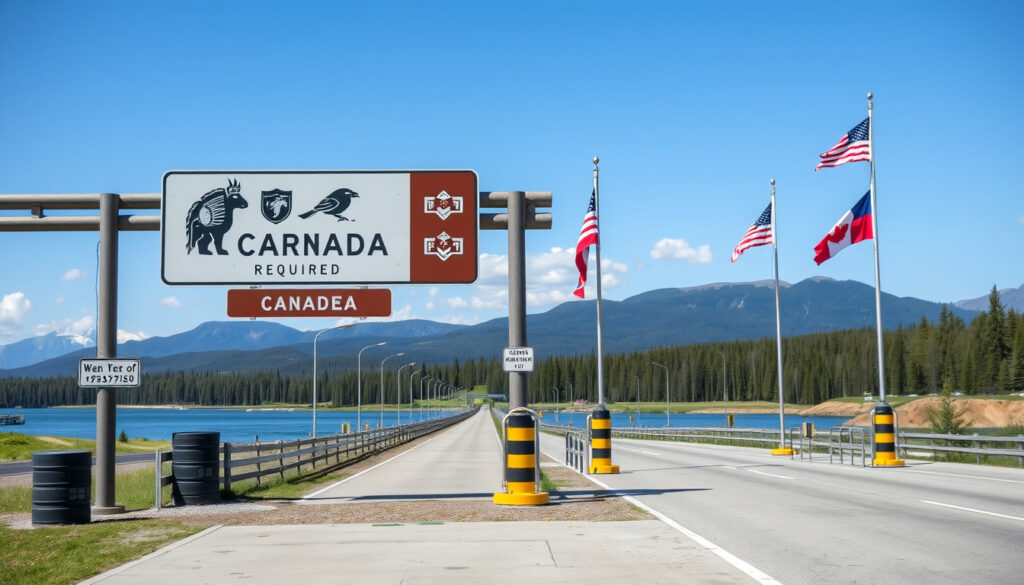
First Nations Border Crossing Warning: New Passport Advice
For First Nations people born in Canada, crossing the US border has always carried a weight that most travelers never think about. The Jay Treaty of 1794 guaranteed the right to pass freely across the border—but that guarantee is now being tested by a new wave of enforcement discretion. Canadian federal officials updated their travel advisory in February 2026, urging status card holders to carry a passport as added protection. The shift reflects a reality many Indigenous travelers are already navigating.
Government Warning Update: February 2026 · Key Document: Secure Certificate of Indian Status · Top Concern Source: Federal travel advice · Affected Group: First Nations and Native Americans born in Canada · Historical Basis: Jay Treaty 1794
Quick snapshot
- Passport advised despite status card (Global News)
- ICE enforcement rise reported in First Nations communities (Global News)
- Status card accepted for land/water but not guaranteed (Government of Canada – Travel Advisory)
- Future ICE enforcement levels remain uncertain
- Roxham Road status for Indigenous travelers not confirmed
- NEXUS eligibility specifics for First Nations not publicly defined
- 1794: Jay Treaty signed (Global News)
- February 2026: Federal government updates border advice (Assembly of First Nations)
- January 2026: AFN condemns ICE actions (Global News)
- Indigenous groups continue monitoring enforcement
- Federal officials urging extra documentation
- Consular access remains available for emergencies
The table below summarizes the key facts behind the advisory. Federal officials issued the update citing concerns about inconsistent Jay Treaty recognition at US ports of entry.
| Label | Value |
|---|---|
| Warning Issuer | Canadian federal government |
| Date of Update | February 2026 |
| Primary Doc | Secure Certificate of Indian Status |
| Border Types Affected | Land, water, air |
| Basis | Jay Treaty |
Does Canada now advise First Nations people carry a passport for US travel?
Canadian federal officials updated travel guidance in February 2026, recommending that First Nations people carry a valid Canadian passport when crossing into the United States. The advisory came despite longstanding Jay Treaty protections that predate modern border controls. Indigenous Services Canada issued the update after reports of increased questioning and detentions at US land borders.
Federal government update
The federal government now advises carrying both a Secure Certificate of Indian Status and a Canadian passport when crossing the US border. Officials stated that while status cards remain legally valid for land and water crossings, acceptance depends entirely on US officer discretion at each port of entry. Air travelers must present a valid passport regardless of status. According to Travel.gc.ca (Government of Canada’s official travel safety portal), this advisory reflects concerns about inconsistent treaty recognition.
Reasons for the advice
US Immigration and Customs Enforcement has been conducting increased identity checks along the Canada-US border. First Nations travelers report being asked to prove blood quantum—currently set at 50% for Jay Treaty eligibility under Section 289 of the US Immigration and Nationality Act. Canadian status cards do not list blood quantum levels, forcing travelers to obtain separate letters from their First Nations governments.
Alternatives to passport
For land and water crossings, the Secure Certificate of Indian Status with a machine-readable zone—introduced as of February 1, 2019—remains accepted in most cases. However, the federal advisory recommends having backup documentation ready. The US Embassy confirms that Native Indians born in Canada retain Jay Treaty entry rights for employment, study, retirement, and immigration purposes, according to official embassy guidance.
Can Native Americans go to Canada without a passport?
Native Americans who are US citizens have different rules when entering Canada than when exercising Jay Treaty rights. Canadian law grants persons registered under the Indian Act the right to enter and remain in Canada regardless of birthplace. However, the question becomes more complex when considering which documents actually work at the border.
Identification requirements
US citizens—including Native Americans—need a valid passport or Nexus card for air entry into Canada. For land and water crossings, the Western Hemisphere Travel Initiative requires an enhanced ID. For Indigenous travelers exercising Jay Treaty rights, the requirements shift: they must prove Canadian birth AND at least 50% Aboriginal ancestry, according to PTLA legal analysis.
Status card acceptance
The Secure Certificate of Indian Status serves as primary identification for registered First Nations entering Canada. Indigenous Services Canada confirms that status cards facilitate border crossing. However, blood quantum proof—which must come from the individual’s own First Nation—sometimes creates complications when Canadian federal documents don’t list ancestry percentages.
Air vs land travel
Air crossings require an internationally recognized passport for all Indigenous travelers. Land and water crossings offer more flexibility under the Jay Treaty framework. The federal government has also established temporary measures allowing Indigenous people separated by the border to reunite in Canada, work or study with waived requirements, and extend stays up to 3 years.
Can I use my status card to cross the border by car?
Your status card can work at land border crossings, but success depends on which officer you meet. US Customs and Border Protection officers have final say on document acceptance. Some First Nations travelers have crossed without issue; others report being turned back or detained for questioning.
Status card validity
The Secure Certificate of Indian Status with machine-readable zone was specifically designed to facilitate Canada-US border crossings. Indigenous Services Canada confirms acceptance at land and sea borders. That said, acceptance remains at US officer discretion—not guaranteed by treaty enforcement mechanisms.
Jay Treaty provisions
The Jay Treaty of 1794 granted American Indians born in Canada the right to freely pass into the US for travel, work, or residence. Section 289 of the Immigration and Nationality Act codifies these rights. Federal court case Akins v. Saxbe (1974) affirmed that Canadian-born Aboriginal people with 50% blood quantum do not need a green card to live or work in the US. The Jay Treaty Border Alliance formed in 2017 specifically to address enforcement gaps.
Recent enforcement issues
Chippewas of Nawash Unceded First Nation issued a travel advisory urging members to carry their status card, birth certificates, and Canadian passport due to reports of ICE detentions. Saugeen First Nation recommends carrying a blood quantum letter from band council alongside the status card. Blood Tribe Chief and Council urged caution during periods of political unrest, noting that Canadian status cards are not always accepted as blood quantum proof. The Assembly of First Nations issued guidance suggesting travelers contact the Canadian Consulate in emergencies.
The same legal right—guaranteed since 1794—now requires extra paperwork to exercise. The treaty protects your right; enforcement discretion can still block your crossing.
What new concerns might First Nations people have today?
First Nations communities across Canada are grappling with a changed reality at the border. Increased US immigration enforcement has created uncertainty where there was once relative predictability. Several Indigenous organizations have issued formal advisories in response.
ICE detentions
Reports of detentions by US Immigration and Customs Enforcement have surfaced at border crossings near Ontario communities. The Chippewas of Nawash advisory specifically cited ICE detentions as the trigger for updated recommendations. Global News reported on incidents where status card holders were questioned about citizenship status despite holding federally recognized identity documents.
Indigenous group warnings
The Assembly of First Nations issued a statement on February 26, 2026, strongly opposing the federal advisory. National Chief Cindy Woodhouse Nepinak called the passport recommendation “directly counter to the inherent right of First Nations to cross the border as affirmed in Article III of the 1794 Jay Treaty.” The Okanagan Nation Alliance urged extreme caution, noting that not all US officers are familiar with Jay Treaty rights.
“Although the Jay Treaty reaffirms our right to travel freely to and from the United States, we expect that not every federal law enforcement officer and ICE agent will be familiar with our rights.”
— Okanagan Nation Alliance (Alliance representing 8 BC First Nations) Per a les Primeres Nacions, travessar la frontera dels EUA ara requereix més atenció, segons aquest avís sobre energia cinètica explicada. energia cinètica explicada
Are Native Americans US citizens?
Yes—American Indians and Alaska Natives are US citizens. This citizenship status has been law since the Indian Citizenship Act of 1924. However, this fact doesn’t automatically resolve all border questions for Indigenous peoples born in Canada.
Citizenship status
The Indian Citizenship Act granted US citizenship to all Native Americans born within US territorial limits. This followed decades of denial despite Indigenous nations pre-dating the American republic. Citizenship doesn’t override Jay Treaty provisions but does create additional legal frameworks for border crossing.
Border implications
For Native Americans born in Canada, dual citizenship considerations apply. The US recognizes their right to enter as citizens, but Jay Treaty rights offer a separate path that doesn’t require proving US residency or immigration status. The two frameworks can overlap, creating options—but also creating questions about which documentation best serves each situation.
Historical context
The Jay Treaty predates the Indian Citizenship Act by 130 years. Indigenous nations’ relationships with both Canada and the US were established through treaties before either country had modern immigration systems. Global News reported on Acting Chief Jessica Keeshig-Martin’s observation that “these borders never existed; they’re fairly recent in terms of our timeline being here on Turtle Island.”
“These borders never existed; they’re fairly recent in terms of our timeline being here on Turtle Island, which we refer to as North America.”
— Jessica Keeshig-Martin, Acting Chief, Chippewas of Nawash Unceded First Nation
The gap between treaty rights on paper and actual crossing experiences at the border continues to widen. Carry backup documentation and know your consulate contact before crossing.
Timeline
The timeline below tracks key events from the Jay Treaty’s signing to the most recent government advisory, illustrating how treaty rights have faced new enforcement pressures over time.
| Date | Event |
|---|---|
| 1794 | Jay Treaty signed |
| 1974 | Akins v. Saxbe court decision affirming rights |
| February 1, 2019 | Secure status cards with machine-readable zone introduced |
| 2017 | Jay Treaty Border Alliance formed |
| January 2026 | AFN condemns ICE actions |
| February 2026 | Federal government updates border advice |
Clarity on what’s known and uncertain
Confirmed
- Passport carrying advised by Canada federal government
- Status card valid for land/water per Government of Canada travel advisory
- US citizenship granted to Native Americans via Indian Citizenship Act 1924
- 50% blood quantum required for Jay Treaty US entry
- Secure status cards with machine-readable zone since February 2019
Unclear
- Future ICE enforcement levels and patterns
- Roxham Road status for Indigenous travelers specifically
- NEXUS program eligibility specifics for First Nations
- Regional port-by-port consistency in document acceptance
Related reading: First Nations Border Crossing Warning
Canada’s passport advisory for First Nations highlights risks akin to common Canada-US border entry rejections, where travelers face denial over documentation or admissibility issues.
Frequently asked questions
What is the Secure Certificate of Indian Status?
The Secure Certificate of Indian Status is the federally-issued photo identification for registered First Nations people in Canada. The current version includes a machine-readable zone that facilitates Canada-US border crossings. It was introduced in February 2019 specifically to improve cross-border travel documentation. However, it doesn’t list blood quantum levels, which creates complications for Jay Treaty verification.
What are Jay Treaty border crossing rights?
The Jay Treaty of 1794 granted American Indians born in Canada the right to freely enter the United States for travel, work, or residence. These rights were codified in Section 289 of the US Immigration and Nationality Act. To qualify, travelers must prove at least 50% Aboriginal blood quantum. The federal court case Akins v. Saxbe (1974) affirmed these rights don’t require a green card.
Is NEXUS available for First Nations at land borders?
NEXUS enrollment is available to all eligible travelers, including First Nations members. However, specific program availability at land borders for status card holders isn’t publicly documented. First Nations travelers should check current NEXUS enrollment requirements, as the program operates separately from Jay Treaty provisions.
What ID is required for Canada-US air travel?
Air crossings require an internationally recognized passport for all travelers, including Indigenous peoples. The Secure Certificate of Indian Status alone does not meet air travel requirements. Canadian federal regulations mandate passports for air entry into the United States regardless of Jay Treaty status.
Are there new rules for entering the US from Canada?
No new rules have been enacted, but enforcement discretion has increased. The federal advisory issued in February 2026 recommends carrying a passport alongside status documents—not because rules changed, but because enforcement patterns have shifted. First Nations advisories reflect concerns about inconsistent recognition of Jay Treaty rights at the border.
What does travel.gc.ca advise for USA travel?
Travel.gc.ca recommends that First Nations travelers carry a valid Canadian passport in addition to their Secure Certificate of Indian Status when crossing into the United States. The advisory notes that while status cards are accepted at land and sea borders, acceptance is at US officer discretion. The guidance specifically addresses concerns about inconsistent Jay Treaty recognition.
Have there been recent ICE incidents with First Nations?
Several First Nations communities have reported ICE questioning and detentions at the Canada-US border. Chippewas of Nawash Unceded First Nation issued a formal advisory citing ICE detentions as the trigger. Ontario communities and British Columbia’s Okanagan Nation Alliance have similarly reported concerns. The Assembly of First Nations issued a statement condemning what it called inappropriate questioning of Indigenous travelers.
For First Nations travelers, the practical takeaway is straightforward: your rights under the Jay Treaty haven’t changed, but the enforcement environment has. Canada advises carrying a passport not because your status card stopped working, but because officer discretion means a status card alone no longer guarantees smooth crossing. The choice is yours—but go prepared, know your consulate number, and understand that what worked last month may face new scrutiny this month.
More related posts
 Holy Spirit: Who He Is and What He Does (Biblical Guide)
 thepeoplesbudget.org James Funding LVNV: Guide to Disputes
 Ariana Grande: Weight Loss, Health, Relationships & Latest News
 Johnny Mathis in 2025: Retirement, Health, and New Music
 Max Holloway: McGregor Rematch, Records & Next Fight
 Dolly Parton Health: Diagnosis, Children, and Long Sleeves
 Rotten Tomatoes Scores Explained: What Each Percentage Means
 Joseph Gordon-Levitt: Where Is He Now? Career & Family