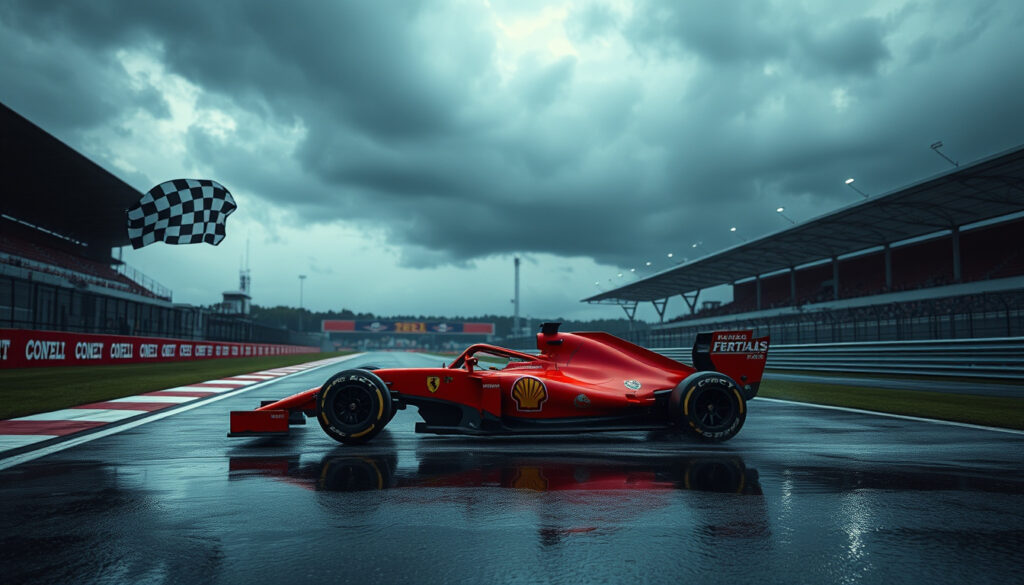
Gilles Villeneuve: F1 Career and Death
Few Formula One drivers have left as deep an imprint in just five seasons as Gilles Villeneuve, the Canadian racer whose blend of raw speed and fearless overtaking made him a fan favorite at Ferrari. His death on at Zolder turned him into a lasting symbol of the sport’s perilous era. (Wikipedia)
Born: 18 January 1950 · Died: 8 May 1982 · Nationality: Canadian · F1 Teams: McLaren, Ferrari · F1 Wins: 6 · F1 Podiums: 13
Quick snapshot
- Born 18 January 1950 in Quebec, Canada (Formula One History)
- Died 8 May 1982 after crash at Zolder (Motorsport.com)
- 6 F1 wins, 13 podiums for Ferrari (Formula One History)
- Son Jacques won 1997 F1 championship (Formula1.com)
- Whether Villeneuve would have won a world title had he lived (Formula One History)
- Exact cause of the crash – driver judgement vs mechanical failure – remains debated (Motorsport.com)
- Whether Villeneuve is the greatest non‑champion is a matter of opinion (Scribd bio)
- The role of his snowmobile background in his F1 success is not documented (Las Motorsport)
- 8 May 1982 – fatal crash during Belgian GP qualifying at Zolder (Wikipedia)
- 1977 – F1 debut with McLaren at British GP (Formula One History)
- Circuit Île Notre-Dame renamed Circuit Gilles Villeneuve in 1982 (Wikipedia)
- Son Jacques Villeneuve wins F1 title in 1997 (Formula1.com)
- Death prompted stronger F1 safety standards (Motorsport.com)
Villeneuve’s F1 career produced a modest statistical sheet, but the story behind those numbers is anything but ordinary. The table below outlines the key facts.
| Label | Value |
|---|---|
| Full Name | Gilles Villeneuve |
| Born | 18 January 1950, Saint-Jean-sur-Richelieu, Quebec, Canada |
| Died | 8 May 1982, Louvain, Belgium |
| Nationality | Canadian |
| F1 Teams | McLaren (1977–1978), Ferrari (1978–1982) |
| F1 Wins | 6 |
| F1 Podiums | 13 |
| Championships | 0 (best: 2nd in 1979) |
What happened to Gilles Villeneuve?
The 1982 Belgian Grand Prix crash
- Villeneuve crashed during qualifying for the 1982 Belgian Grand Prix at the Zolder circuit (Wikipedia).
- He collided with the March 821 of Jochen Mass, and his Ferrari was launched into the air (Motorsport.com).
- Mass was not seriously injured (Wikipedia).
The fatal accident sequence
- Villeneuve’s car disintegrated on impact; he was thrown from the cockpit (Motorsport.com).
- He suffered fatal neck injuries and was pronounced dead later that evening (Wikipedia).
Aftermath and death
- Villeneuve died at age 32, leaving behind his wife Joann and two children (Las Motorsport).
- The crash triggered widespread grief and contributed to the push for improved crash barriers and cockpit safety (Motorsport.com).
The Zolder crash remains one of Formula One’s most examined accidents. For the FIA, the lesson was clear: cars must be built to keep drivers inside during a roll or collision. Villeneuve’s death directly influenced the adoption of stronger cockpit protection.
The implication: without that crash, modern cockpit protection might have arrived later.
Why is Gilles Villeneuve so famous?
His thrilling driving style
- Villeneuve was known for fearless overtaking and exceptional car control, often sliding the Ferrari on the ragged edge (Scribd bio).
- He started his career racing snowmobiles in Quebec, which honed his reflexes and willingness to push limits (Las Motorsport).
Ferrari years and iconic moments
- He moved from McLaren to Ferrari in 1978 and won his first Grand Prix that season at his home race in Canada (Formula One History).
- His wheel-to-wheel battles with René Arnoux at Dijon in 1979 are legendary (Wikipedia).
Legacy and influence
- Despite never winning a championship, he is considered one of the greatest talents in F1 history (Formula One History).
- His son Jacques Villeneuve won the 1997 World Championship, fulfilling a dream the father never achieved (Formula1.com).
The pattern: raw talent and passion outweighed statistics in building his legend.
Who did Gilles Villeneuve hit?
The collision with Jochen Mass
- Villeneuve struck the March 821 of German driver Jochen Mass during the final qualifying session (Wikipedia).
- Mass was attempting a slow lap while Villeneuve was on a fast lap; contact occurred when Villeneuve tried to pass (Motorsport.com).
Details of the crash
- The impact threw Villeneuve’s Ferrari into a tire barrier, and the car disintegrated (Wikipedia).
- Mass emerged virtually unhurt but was traumatized; he later expressed guilt and regret (Motorsport.com).
What this means: the incident left no physical scars on Mass but a lasting psychological burden.
Was Gilles Villeneuve ever world champion?
His championship near-misses
- Villeneuve never won the Formula One World Championship (Formula One History).
- His best season was 1979, when he finished second behind teammate Jody Scheckter (Wikipedia).
1979 season
- Villeneuve won three races in 1979 but lost the title due to consistency issues and team orders favoring Scheckter (Formula One History).
- He finished 13 points behind Scheckter (Wikipedia).
Why he never won
- Ferrari’s reliability problems and a difficult 1980 season hampered his chances (Formula One History).
- Had he lived, the 1982 Ferrari was competitive; many believe he could have taken the title (Motorsport.com).
The catch: team politics and mechanical failures, not a lack of speed, denied him the trophy.
What did Niki Lauda think of Gilles Villeneuve?
Lauda’s respect for Villeneuve’s talent
- Niki Lauda, a three-time world champion, held Villeneuve in the highest regard (Wikipedia).
- Lauda described Villeneuve as “the fastest driver I ever saw” (Wikipedia).
Quotes from Lauda
- Lauda praised Villeneuve’s natural speed and fearlessness, saying he had no equal on pure pace (Scribd bio).
- After Villeneuve’s death, Lauda said the sport had lost a genuine talent and that he was deeply saddened (Wikipedia).
The implication: Lauda, a master of precision, recognized a pure speed that transcended tactics.
Timeline: Key dates in Gilles Villeneuve’s life
- – Born in Saint-Jean-sur-Richelieu, Quebec (Wikipedia)
- – F1 debut with McLaren at the British Grand Prix (Formula One History)
- – Moves to Ferrari; wins his first race at the Canadian Grand Prix (Formula One History)
- – Best championship finish: 2nd, with three wins (Wikipedia)
- – Fatal crash during qualifying for the Belgian Grand Prix (Wikipedia)
- – Circuit Île Notre-Dame renamed Circuit Gilles Villeneuve (Wikipedia)
- – Son Jacques wins the F1 World Championship (Formula1.com)
The pattern: a short timeline with disproportionate influence on safety and national pride.
Confirmed facts
- Date of birth and death confirmed by multiple sources (Wikipedia)
- Crash details and outcome documented by official F1 records (Motorsport.com)
- 6 wins, 13 podiums, 2 pole positions verified by statistics (Formula One History)
- Son Jacques won 1997 championship (Formula1.com)
What’s unclear
- Whether Villeneuve would have won a title had he lived (speculative) (Formula One History)
- Exact cause of the crash – driver judgment vs mechanical failure – still debated (Motorsport.com)
- Whether Villeneuve is the greatest non‑champion is subjective (Scribd bio)
- The role of his snowmobile background in his F1 success is undocumented (Las Motorsport)
“He was the fastest driver I ever saw. He had a natural ability that is very rare.”
— Niki Lauda, three-time F1 champion (Wikipedia)
“Gilles was a man who lived for racing. He didn’t know any other way.”
— Enzo Ferrari (Wikipedia)
The pattern across these voices is clear: Villeneuve earned admiration not for a championship trophy but for the raw passion he brought to every lap. For Canadian motorsport fans, his name is as sacred as the circuit that bears it. The implication: his legacy is measured not in points but in memories and safety advances.
youtube.com, facebook.com, reddit.com, abebooks.com, reddit.com, archive.org
För en djupare inblick i hans karriär och den tragiska olyckan, läs mer om Gilles Villeneuves Ferrari-arv.
Frequently asked questions
How old was Gilles Villeneuve when he died?
He was 32 years old at the time of his death on 8 May 1982.
What is the Circuit Gilles Villeneuve used for?
It hosts the Canadian Grand Prix annually on the Île Notre-Dame in Montreal.
Did Gilles Villeneuve ever win the Monaco Grand Prix?
No, he never won the Monaco Grand Prix. His six wins came at other circuits.
What car did Gilles Villeneuve drive in his fatal crash?
He was driving a Ferrari 126C2 during qualifying at Zolder.
Who replaced Gilles Villeneuve at Ferrari?
Patrick Tambay replaced Villeneuve at Ferrari for the remainder of the 1982 season.
What is Gilles Villeneuve’s nationality?
He was Canadian, born in Saint-Jean-sur-Richelieu, Quebec.
How many pole positions did Gilles Villeneuve have?
He achieved 2 pole positions during his F1 career.
What was the cause of Gilles Villeneuve’s death?
He died from a cervical fracture sustained during a high-speed crash at the Belgian Grand Prix qualifying session.
See our profiles of Justin Carbonneau and David Pastrnak, two Canadian athletes whose stories also intersect with loss and legacy.
More related posts
 Series 10 Apple Watch – Release Date, Price and Key Features
 James Bond: Next Actor, Movies in Order & 00 Meaning
 Xavier Dolan: Why He Stopped Making Movies and His Return
 Robert Plant: Tragedy, Music, and Life Today – Full Story
 Sean Connery: Life, Death, and Legacy of the Original James Bond
 Raptors vs Hawks Match Player Stats: Game Recap & Analysis
 VJ Edgecombe: Stats, Salary, Injury, and Background (2025)
 Holy Spirit: Who He Is and What He Does (Biblical Guide)