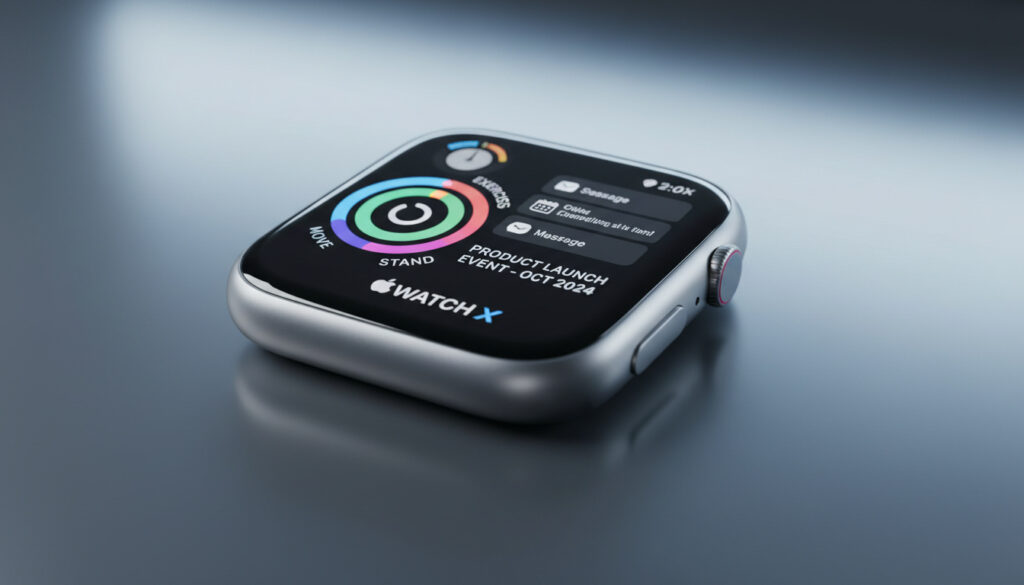
Series 10 Apple Watch – Release Date, Price and Key Features
Apple unveiled the Apple Watch Series 10 on September 9, 2024, during its “It’s Glowtime” event, positioning the device as the thinnest and most advanced standard-model smartwatch in the company’s history. The wearable hit retail shelves on September 20, 2024, introducing a refined design that measures nearly ten percent thinner than the Series 9 while expanding the display to the largest size ever offered on an Apple Watch.
The Series 10 retains the $399 entry point for aluminum GPS models but introduces premium titanium finishes for the first time in the standard lineup, available exclusively with cellular connectivity. Key hardware revisions include the S10 system-in-package with a four-core Neural Engine, a redesigned metal back that integrates the antenna, and enhanced durability features including crack-resistant glass.
Health capabilities expanded significantly with FDA-cleared sleep apnea notifications, joining existing ECG and blood oxygen monitoring tools. The device ships with watchOS 11 and maintains 18-hour battery life despite the slimmer profile, now supporting faster charging speeds.
What are the new features in Apple Watch Series 10?
September 20, 2024
$399 (42mm GPS)
Largest ever, 2,000 nits
10% thinner, S10 chip
- First Apple Watch with FDA-cleared sleep apnea detection capability
- Largest display ever with wider viewing angles and thin bezels
- New S10 SiP featuring a 4-core Neural Engine for improved efficiency
- Thinner metal back design integrates the antenna for better connectivity
- New Jet Black polished aluminum finish alongside rose gold and silver
- 18-hour battery life with faster charging capabilities
- Water depth and temperature sensing for swimming metrics
| Feature | Series 10 | Series 9 |
|---|---|---|
| Chipset | S10 SiP with Neural Engine | S9 SiP |
| Display Size | 42mm / 46mm | 41mm / 45mm |
| Thickness | Nearly 10% thinner | Standard |
| Maximum Brightness | 2,000 nits | 2,000 nits |
| Sleep Apnea Detection | Yes (FDA-cleared) | No |
| Battery Life | 18 hours | 18 hours |
| Charging Speed | Faster charging | Standard |
| Depth Gauge | Water depth & temperature | Not specified |
| Case Materials | Aluminum, Titanium | Aluminum, Stainless Steel |
| Starting Price | $399 | $399 |
What is the Apple Watch Series 10 release date and price?
Apple announced the Series 10 on September 9, 2024, during the “It’s Glowtime” presentation at Steve Jobs Theater in Cupertino. Pre-orders opened immediately following the event, with retail availability commencing on September 20, 2024. The launch aligned with the release of iOS 18 and watchOS 11, ensuring ecosystem parity for users upgrading from older iPhone models.
Pricing Structure
Pricing maintains parity with the previous generation for aluminum models while introducing premium tiers for the new titanium option. The 42mm GPS aluminum configuration starts at $399, matching the Series 9 launch price. Cellular connectivity adds $100 to each aluminum size, positioning the 46mm cellular model at $529.
Titanium variants, available exclusively with cellular connectivity, command significantly higher prices. The 42mm titanium model retails for $699, while the larger 46mm version costs $749. These prices reflect the premium materials and cellular radio inclusion, positioning the titanium Series 10 below the Ultra 2 in Apple’s pricing hierarchy.
Titanium finishes require cellular connectivity and carry a $200 premium over equivalent aluminum models. All titanium variants include sapphire crystal displays.
Color and Size Configurations
The Series 10 introduces two case sizes: 42mm and 46mm, replacing the previous 41mm and 45mm options. Aluminum models arrive in jet black with a new polished finish, rose gold, and silver. The titanium lineup offers natural, gold, and slate finishes with what Apple describes as a jewelry-like shine.
How does Apple Watch Series 10 compare to Series 9?
The Series 10 represents an evolutionary upgrade over its predecessor, prioritizing physical refinement and display expansion over revolutionary feature additions. The most immediate distinction lies in the industrial design: the Series 10 measures approximately ten percent thinner than the Series 9, achieving a profile that Apple claims is its thinnest ever while maintaining structural integrity.
Design and Display Evolution
While both generations feature 2,000-nit maximum brightness, the Series 10 expands the active display area significantly with wider viewing angles. The shift to 42mm and 46mm case dimensions from the previous 41mm and 45mm provides increased screen real estate without substantially increasing wrist footprint. The Series 10 also introduces titanium as a material option for the standard line, replacing the stainless steel variants offered with Series 9.
Performance and Health Capabilities
The S10 SiP supersedes the S9, delivering enhanced processing efficiency through its four-core Neural Engine. Real-world performance gains appear subtle, with improvements concentrated in on-device Siri processing and double-tap gesture responsiveness. The critical health differentiator remains the FDA-cleared sleep apnea detection system, unavailable on Series 9. Both models share 18-hour battery ratings, though the Series 10 achieves faster charging speeds.
Upgrade Considerations
Existing Series 9 owners face a modest upgrade proposition. The thinner chassis and larger display offer tangible ergonomic benefits, particularly for users prioritizing nighttime wear comfort. However, core health and fitness functionality overlap significantly, with both devices supporting ECG, menstrual tracking, and crash detection. New purchasers gain the advantage of extended software support and the sleep apnea feature, while Series 9 users may find little compelling reason to switch unless specifically seeking the thinner profile or titanium aesthetic.
What health and fitness features does Apple Watch Series 10 offer?
The Series 10 consolidates Apple’s health monitoring ecosystem while introducing the first FDA-cleared sleep apnea detection algorithm for a consumer wearable. The device combines optical heart rate sensors, electrical heart sensors for ECG, and accelerometer data to generate comprehensive health metrics through the Vitals app.
Sleep Apnea Detection
The headline health innovation involves sleep apnea notifications, which analyze breathing disturbances during sleep over extended periods. FDA clearance validates the feature for detecting potential moderate to severe sleep apnea, though users must complete a diagnostic workflow to activate monitoring. The system relies on the accelerometer to detect wrist movements associated with breathing interruptions.
Sleep apnea notifications are intended for users 22 years and older who have not been previously diagnosed with the condition. The feature requires wearing the device to bed for multiple nights before generating a risk assessment.
Advanced Workout and Aquatic Metrics
Beyond standard fitness tracking, the Series 10 introduces depth and water temperature sensing for swimming activities. The depth gauge functions to 50 meters, providing real-time metrics during aquatic workouts. The Training Load feature tracks workout intensity over time, while the updated Smart Stack in watchOS 11 surfaces relevant fitness data automatically.
The Series 10 requires an iPhone Xs or later running iOS 18 or newer. Older iPhone models cannot pair with the device, potentially necessitating a phone upgrade for users with legacy hardware.
Battery and Charging
Despite the slimmer chassis, Apple maintains the 18-hour all-day battery specification. However, charging speeds have improved, with the device reaching full charge faster than Series 9 models. Connectivity options include L1 GPS support for major global navigation networks, Bluetooth 5.3, and second-generation Ultra Wideband for precise device location and AirDrop functionality.
When did Apple Watch Series 10 launch and what updates followed?
- : Apple announces the Series 10 at the “It’s Glowtime” event alongside iPhone 16 and AirPods 4.
- : Retail availability begins in major markets including the United States, Canada, UK, and Australia.
- : watchOS 11 ships pre-installed on new devices and becomes available as a free upgrade for compatible older Apple Watch models.
What remains uncertain about Apple Watch Series 10?
Established Facts
- Released September 20, 2024, following a September 9 announcement
- Starting price of $399 for 42mm GPS aluminum models
- Sleep apnea detection received FDA clearance prior to launch
- Physical dimensions are nearly 10% thinner than Series 9
- Requires iOS 18 and iPhone Xs or later
- Titanium models available only with cellular connectivity
Outstanding Questions
- Long-term battery degradation rates under real-world usage conditions
- Specific watchOS 12 feature additions planned for 2025
- Future availability of blood pressure monitoring, rumored for subsequent generations
- Regional pricing variations outside North American markets
How does Apple Watch Series 10 position itself in the wearables market?
The Series 10 occupies a distinct position between the budget-oriented Apple Watch SE and the rugged Ultra 2. By introducing titanium to the standard line, Apple bridges the aesthetic gap between casual and extreme-use cases without incorporating the Ultra’s depth certification or extended battery life. This strategy targets users seeking premium materials without the bulk or price point of the Ultra tier.
Ecosystem integration remains a primary differentiator against competitors. The requirement for iPhone Xs or newer hardware running iOS 18 creates a unified environment for Handoff, Continuity, and Fitness+ services. During travel, the device’s Wallet and Apple Pay functionality complement accessories like those found in our Best Carry On Luggage – Expert Tested Top Picks 2024 guide, streamlining airport navigation and transit payments.
Market response indicates particular interest among users of Series 6 and earlier models, while Series 9 users largely deferred upgrades. The introduction of sleep apnea monitoring addresses a significant gap in consumer health wearables, potentially accelerating medical-grade adoption among users previously reliant on clinical sleep studies for diagnosis.
What do official sources confirm about Apple Watch Series 10?
The largest display ever on Apple Watch, with wide viewing angles.
— Apple Newsroom, September 2024
Real-world reviews note strong accuracy and design appeal.
Is Apple Watch Series 10 the right choice for you?
The Apple Watch Series 10 delivers meaningful refinements for new buyers and those upgrading from models older than Series 9, offering the thinnest standard design to date, FDA-cleared sleep apnea detection, and expanded display real estate. While Series 9 owners face a less compelling upgrade path, the combination of faster charging, titanium options, and watchOS 11 integration establishes this generation as a solid evolutionary step. For international pricing considerations, reference current exchange rates through our 205 USD to CAD – Today’s Rate, Chart and Conversion Tips resource.
Frequently asked questions about Apple Watch Series 10
Is the Apple Watch Series 10 waterproof?
The Series 10 maintains 50-meter water resistance suitable for swimming and shallow-water activities. It includes a depth gauge and water temperature sensor for aquatic workouts, though it is not intended for scuba diving or high-velocity water sports.
What iPhone models work with Apple Watch Series 10?
Compatibility requires an iPhone Xs or later running iOS 18. The iPhone SE (2nd generation or later) also supports pairing. Older iPhone models cannot establish connectivity with Series 10.
Does Apple Watch Series 10 measure blood pressure?
No. While the device includes advanced heart rate monitoring and ECG capabilities, blood pressure measurement is not available on Series 10. Apple has reportedly researched this feature for future generations.
How quickly does Apple Watch Series 10 charge?
Apple cites faster charging speeds compared to Series 9, though specific minute counts vary by power adapter and battery condition. The device maintains an 18-hour all-day battery life rating.
What distinguishes GPS from Cellular models?
GPS models require an iPhone nearby for most connectivity features. Cellular models include LTE and UMTS radios, enabling independent calling, messaging, and data without paired iPhone proximity. Titanium models are available only in cellular configurations.
Can I use existing Apple Watch bands with Series 10?
Yes. The 42mm Series 10 uses bands compatible with previous 41mm cases, and the 46mm uses bands fitting prior 45mm models. Existing strap collections remain functional across generations.
More related posts
 Love Quotes for Her: Best Romantic, Deep & Sweet Words
 Elections Canada Results 2025: Full Breakdown and Maps
 Love Is Blind Season 8 Couples Still Together 2025
 League of Legends Champions – Complete List and 2026 Guide
 Charleston Lake Provincial Park: Swimming, Bears & Camping Guide
 Millbrook Funeral Home Obituaries – Millbrook ON Listings
 How Long to Cook Chicken Thighs in Oven: Baking Times
 Chainsaw Man Movie Release Date: When to Watch the Reze Arc