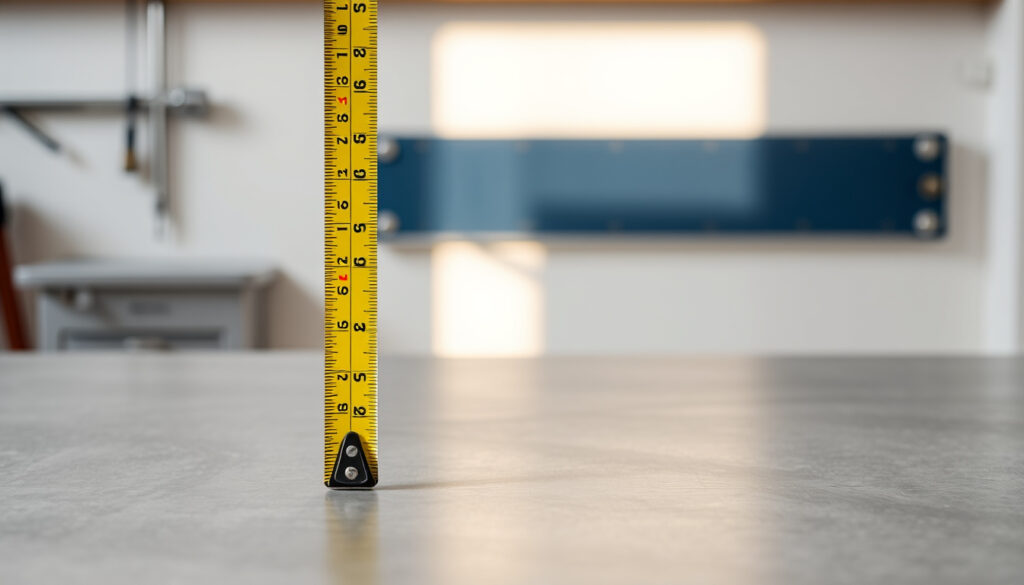
1.9 m in Feet – Exact Conversion and Height Context
Converting 1.9 meters to feet yields exactly 6.2335958005 feet, or approximately 6 feet 2.8 inches. This measurement falls above average height for most adult populations worldwide, placing someone at roughly the 95th percentile for adult males in many countries. Understanding this conversion matters for international travel, sports comparisons, medical records, and any context where metric and imperial measurements intersect.
The conversion uses a standardized factor established by the National Institute of Standards and Technology, where 1 meter equals exactly 3.280839895 feet. This precise factor derives from the international agreement defining the relationship between metric and imperial units. Whether for professional purposes, personal curiosity, or practical applications like furniture shopping or sports analytics, knowing how to accurately convert between these systems ensures clarity and prevents measurement errors.
How Many Feet is 1.9 Meters?
Key Conversion Insights
- 1.9 meters equals exactly 6.2335958005 feet using the standard conversion formula
- The practical rounded value is 6 feet 2.8 inches for everyday use
- Total inches: 74.803 inches when fully calculated
- Centimeter equivalent: 190 cm exactly
- This height surpasses the global male average of 1.71–1.75 meters by 15–19 centimeters
- Comparable to shorter NBA point guards, placing users well above recreational basketball averages
Snapshot Conversion Facts
| Unit | Value | Notes |
|---|---|---|
| Meters | 1.9 | Input measurement |
| Feet | 6.2336 | Rounded to 4 decimals |
| Inches | 74.803 | Total combined |
| Centimeters | 190 | Exact equivalent |
1.9 Meters in Feet and Inches
Breaking Down the Measurement
The conversion from 1.9 meters to feet and inches requires understanding how feet and inches subdivide within the imperial system. One foot contains exactly 12 inches, so the whole-number portion of the feet value represents complete feet, while the decimal portion converts to additional inches.
Applying the standard formula where feet equals meters multiplied by 3.280839895, the calculation proceeds as follows: 1.9 multiplied by 3.280839895 produces 6.2335958005 feet. The whole number 6 represents six complete feet. The remaining decimal portion, 0.2335958005, converts to inches by multiplying by 12, yielding approximately 2.8 inches. This confirms that 1.9 meters converts to 6 feet and 2.8 inches.
For rapid mental conversion, remember that 1.9 m ≈ 6 ft 3 in. The difference amounts to only 0.2 inches, which falls within rounding tolerances for most practical applications.
Visual Height Comparison
At 6 feet 2.8 inches, a person standing at 1.9 meters tall would easily stand out in most crowds. Standard U.S. residential doorways measure approximately 6 feet 8 inches (2.03 meters) from floor to top, meaning someone at this height fits comfortably with room to spare. The individual would reach most standard high shelves without difficulty and would find economy airplane seating potentially snug but manageable for short flights.
Is 1.9 Meters Considered Tall?
Average Height Comparisons
For adult males globally, average height ranges from approximately 1.71 to 1.75 meters (5 feet 7 inches to 5 feet 9 inches). Someone measuring 1.9 meters exceeds this average by 15 to 19 centimeters—roughly 6 to 7.5 inches taller than typical adult men worldwide. This places an individual at or above the 95th percentile for male height in many countries.
Within the United States, average male height sits at approximately 1.75 meters (5 feet 9 inches). A 1.9-meter individual surpasses this national average by roughly 4 inches, positioning them well above the typical American male. For adult women, who average approximately 1.62 meters (5 feet 4 inches) globally, a 1.9-meter woman would be exceptionally tall—likely exceeding the 99th percentile in virtually every population.
Sports and Athletic Context
In professional basketball, where height commands premium value, a player at 6 feet 2.8 inches (1.9m) would occupy guard or forward positions. The average NBA player stands between 6 feet 6 inches and 6 feet 7 inches (1.98–2.01 meters), meaning a 1.9-meter athlete falls slightly below the league average but well above recreational competition levels. This height corresponds roughly to the 75th to 90th percentile among professional players, making it above average for most basketball contexts.
Other athletic domains show varied contexts for this height. American football cornerbacks average around this height, while soccer players like Cristiano Ronaldo (1.87m) approach but don’t quite reach 1.9 meters. The legendary Lionel Messi measures 1.70 meters, demonstrating how this height exceeds even elite athletes in sports where height provides less advantage.
A 1.9-meter male ranks above the 95th percentile in most Western nations, above the 90th percentile in many Asian countries, and above the 85th percentile globally. Percentile rankings vary by ethnicity, nutrition, and other demographic factors.
How to Convert Meters to Feet
Step-by-Step Formula
The meter-to-feet conversion follows a straightforward mathematical relationship established through international agreement. The National Institute of Standards and Technology defines the precise conversion factor derived from the exact relationship where 1 inch equals 2.54 centimeters. This definition, standardized internationally, enables consistent conversions between metric and imperial systems.
The conversion formula reads: feet = meters × 3.280839895. This factor emerges from the precise relationship between the meter and foot, where 1 meter equals approximately 3.28084 feet for most practical applications. The calculation proceeds by multiplying the meter value by this conversion factor, yielding the equivalent feet measurement.
For the specific case of 1.9 meters: multiplying 1.9 by 3.280839895 produces 6.2335958005 feet. To express this as feet and inches, separate the whole number (6 feet) from the decimal portion (0.2335958005), then multiply the decimal by 12 to obtain inches: 0.2335958005 × 12 = 2.803149606 inches, which rounds to approximately 2.8 inches.
Using Online Converters
While manual calculation provides accuracy, online conversion tools offer convenience and instant results. Reputable conversion calculators apply the same standardized formula, eliminating calculation errors and providing consistent results across different platforms. For critical applications requiring documented precision, verifying results against multiple independent sources ensures reliability.
Different conversion tools may display varying decimal places. For engineering or scientific applications requiring high precision, use calculators showing at least 6 decimal places. For everyday purposes, 2–3 decimal places or rounded inch values suffice.
Certainty and Precision in the Conversion
| Established Information | Values Requiring Context |
|---|---|
| Exact conversion factor: 1 m = 3.280839895 ft | Practical rounding depends on application |
| 1.9 m = 6.2335958005 ft (precise) | Height percentile rankings vary by source |
| 1.9 m = 6 ft 2.8 in (rounded) | NBA percentile estimates are approximate |
| Formula derived from NIST standards | Average height comparisons based on general population data |
Understanding the Metric and Imperial Systems
The metric system, developed during the French Revolution and refined over centuries, provides a decimal-based framework where units relate through powers of ten. The meter, defined originally as one ten-millionth of the distance from the equator to the North Pole, now derives from the speed of light—a constant that cannot change through location or time. This scientific foundation ensures metric measurements remain stable and universally reproducible.
The imperial system, with roots in Roman and medieval English measurements, evolved through centuries of practical use rather than systematic design. The foot as a unit dates back centuries, though its precise length varied across regions and time periods. The international agreement reached in 1959 standardized the foot at exactly 0.3048 meters, resolving centuries of measurement inconsistencies and enabling precise cross-system conversions.
Today, most nations use the metric system officially, though the United States, Myanmar, and Liberia maintain primary use of imperial units. This dual-system reality creates ongoing demand for accurate conversions, particularly in international commerce, engineering, and personal contexts where measurements from different regions must reconcile.
Sources and Standards
“The international foot is defined as exactly 0.3048 meters, derived from the 1959 agreement between the United States and countries of the Commonwealth of Nations.”
“The relationship 1 inch = 2.54 cm is defined exactly, serving as the foundation for all metric-imperial conversions including the meter-to-foot factor.”
Summary
Converting 1.9 meters to feet produces exactly 6.2335958005 feet, which translates to approximately 6 feet 2.8 inches or 74.803 total inches. This height exceeds global and U.S. male averages by significant margins, placing an individual well above the 95th percentile for most populations. The conversion uses the standardized NIST formula where meters multiply by 3.280839895 to yield feet. For those exploring related weight conversions, the Lbs to Kg Conversion guide provides similar metric-imperial conversion methodology.
Frequently Asked Questions
How many inches is 1.9 meters?
1.9 meters equals approximately 74.8 inches. This calculation multiplies 1.9 by 39.37007874 (the inches-per-meter conversion factor).
What is the formula for converting meters to feet?
The formula is: feet = meters × 3.280839895. This factor derives from the exact relationship where 1 meter equals approximately 3.28084 feet.
Is 1.9 meters considered tall for a man?
Yes. At 6 feet 2.8 inches, 1.9 meters exceeds the global male average (1.71–1.75m) by 15–19 cm, placing an individual above the 95th percentile in most countries.
How tall is 1.9 meters in real-world terms?
A 1.9-meter person stands taller than most NBA guards but below the league average. They fit comfortably under standard 6-foot-8 doorways and would reach high shelves easily.
How precise is the 6.23 feet approximation?
The rounded value 6.23 feet differs from the exact value by approximately 0.0036 feet (less than 1/20 inch), which suffices for casual purposes but not engineering precision.
What sports positions suit someone at 1.9 meters?
In basketball, 1.9 meters suits guard or forward positions. In American football, this height matches typical cornerback dimensions. For related sports height comparisons, see How Tall Is Alejandro Kirk in Feet.
More related posts
 Porsche 911 GT3 RS Price: New, Used & Global Costs
 Premier Ministre du Canada – Mark Carney Leads in 2025
 Lbs to Kg Conversion – Formula, Chart and Calculator
 Things to Do Montreal – Top Attractions and Itineraries
 How Tall Is Alejandro Kirk in Feet – Official MLB Height
 Rinnai Tankless Water Heater: Problems, Lifespan & Maintenance
 Environment Canada Saint John NB – Weather Services Guide
 How Much is Spotify Premium in 2026? Prices & Plans